
Find fellowships, conferences, grants and awards deadlines, workshops and networking opportunities, crowd-sourced leads to job banks, reporting toolkits, hundreds of MOOCs and more. GO >>
Are you an SEJ member who's authored, co-authored or edited a non-fiction or fiction environmental book (published in 2009) you'd like included on this page? Please send the following to web content manager Cindy MacDonald:
- a one-paragraph description
- name of publisher and year of publication
- ISBN number
- .gif or .jpg cover image (optional)
- Internet link to more information (optional)
Find links to members' books published in other years here.
Non-Fiction
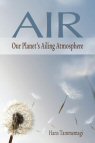
"Air: Our Planet's Ailing Atmosphere"
By Hans Tammemagi
The Earth's atmosphere is beautiful, complex and vital to all living beings. It also links all creatures and is the great commons. "Air" describes how scientists unraveled the complexity of the atmosphere, and also explains its declining quality including smog, acid rain, ozone depletion and global warming. With a rising population, more synthetic chemical production and ever more complex technology, even worse threats than global warming are on the way. Solutions are proposed. "Air" is a vital read on an issue of rapidly growing urgency. Oxford University Press, 2009. ISBN 978-0-19-543007-3. More information.
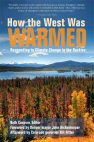
"How the West Was Warmed: Responding to Climate Change in the Rockies"
Edited by Beth Conover, with essays by John Daley, Todd Neff, Michelle Nijhuis, Hillary Rosner, and Florence Williams
Melting glaciers. Pine beetle infestation. Drought. Carbon footprints. Green jobs and promises of a new energy economy... When the venerable Aspen Skiing Company starts talking about the "death of snow," even the most determined deniers start to wonder, what is going on? This enlightening collection of essays develops a portrait of the wide range of responses to climate change in the Rocky Mountain West. For more than two decades, this region has been a leader in addressing climate change, and today it is a hub of solutions to this pressing global issue. Written by more than forty veteran journalists (including SEJ members John Daley, Todd Neff, Michelle Nijhuis, Hillary Rosner, and Florence Williams), scientists, businesspersons, and policy makers, these essays show us how climate change has and continues to affect the ways in which we live, work, and play. An alternative to the many dry scientific books and how-to greening manuals about global warming, "How The West Was Warmed" provides insight, hope, and a little dose of humor for inspiration. Fulcrum Publishing, 2009. ISBN 193621802X. More information.
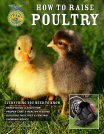
"How to Raise Poultry"
By Christine Heinrichs
Go beyond chickens into the varied world of ducks, geese, swans, turkeys, guineafowl, game birds and ratites, an unfamiliar term for ostriches, emus and rheas, all of which are kept domestically. They're all different species and have different husbandry needs, but the attraction of beautiful birds is powerful. Hundreds of beautiful color photos make this a book to inspire as well as inform. References, Resources and Glossary help navigate the intricacies of poultry keeping. Voyageur Press, 2009. ISBN 9780760334799. More information.
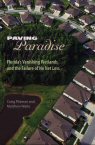
"Paving Paradise: Florida's Vanishing Wetlands and the Failure of No Net Loss"
By Craig Pittman and Matthew Waite
"This is an exhaustive, timely, and devastating account of the destruction of Florida's wetlands, and the disgraceful collusion of government at all levels. It's an important book that should be read by every voter, every taxpayer, every parent, every Floridian who cares about saving what's left of this precious place." — Carl Hiaasen. Authored by Craig Pittman and Matthew Waite. University Press of Florida, 2009. ISBN 13: 978-0-8130-3286-3. ISBN 10: 0-8130-3286-5. More information.
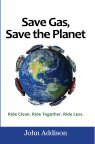
"Save Gas, Save the Planet"
By John Addison
Millions of Americans are now reducing their transportation carbon footprint by riding clean, riding less, and riding together. Explore clean vehicles that are becoming available and affordable including electric vehicles, plug-in hybrids, hydrogen vehicles, turbodiesels, and new cars with great mileage. See how the best employers promote flexible work and commute programs. Learn how families and friends are taking new approaches to sharing gas misers, gaining free time in the process. Develop new insights in the future of transportation, the auto industry, and into the great fuel race. This book, by John Addison, can be a helpful resource when writing transportation related articles. The solutions to saving money and saving the planet are now available. Optimark Inc., March 2009. ISBN 978-0-9722337-2-9. More information.
"Soul of a People: The WPA Writers' Project Uncovers Depression America"
By David Taylor
"Soul of a People" is about a handful of people who were on the Federal Writers' Project in the 1930s and the portrait they created of America at a turning point. This particular handful went from poverty to great things later, and included John Cheever, Ralph Ellison, Zora Neale Hurston, Richard Wright, and Studs Terkel. In the 1930s they were all caught up in an effort to describe America in a series of Works Progress Administration (WPA) guides. Through striking images and firsthand accounts, the book reveals their experiences and the most vivid excerpts from selected guides and interviews: Harlem schoolchildren, truckers, Chicago fishmongers, Cuban cigar makers, a Florida midwife, Nebraskan meatpackers, and blind musicians. Companion to a 2009 Smithsonian documentary film of the same title. Drawing on new discoveries from personal collections, archives, and recent biographies, a new picture has emerged in the last decade of how the participants' individual dramas intersected with the larger picture of their subjects. This book illuminates what it felt like to live that experience, how going from joblessness to reporting on their own communities affected artists with varied visions, as well as what feelings such a passage involved: shame humiliation, anger, excitement, nostalgia, and adventure. Also revealed is how the WPA writers anticipated, and perhaps paved the way for, the political movements of the following decades, including the Civil Rights movement, the Women's Rights movement, the environmental movement, and the Native American rights movement. Wiley, 2009. ISBN 0470403802. More information. Taylor's Soul of a People Blog.
Visibility: