



SEJournal Online is the digital news magazine of the Society of Environmental Journalists. Learn more about SEJournal Online, including submission, subscription and advertising information.
October 1, 2025
 |
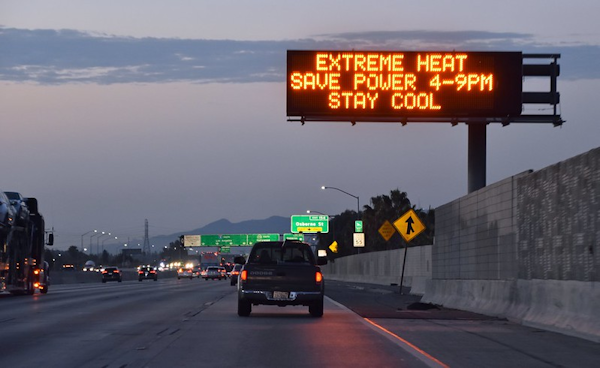 |
| Journalists in cities that suffer from extreme heat, like Phoenix or Los Angeles (above), have valuable reporting lessons to share about this intersection of climate change and public health, including by focusing on vulnerable communities. Photo: Fourbyfourblazer via Flickr Creative Commons (CC BY 2.0). |
Feature: Covering the Health Impacts of Extreme Heat — An Arizona Reporter Weighs In
By Katherine Davis-Young
Phoenix is famous for its heat. But over the last few years, the nation’s fifth-largest city has endured longer and more intense heat waves than ever before. And vulnerable Arizona communities are facing devastating health consequences as a result of these extreme temperatures.
As a senior field correspondent for Phoenix’s NPR member station, KJZZ, I have spent several years covering this intersection of climate change and public health.
As another hot summer has wound down, here’s what I’ve been reporting in Phoenix, and here’s what I’d recommend for reporters covering this topic in other parts of the United States.
Heat-related deaths have increased dramatically
Maricopa County has seen heat-related deaths skyrocket in the last decade. In 2014, there were 61 heat deaths reported. Last year, there were 608.
The increase in fatalities has coincided
not only with rising temperatures but
also with an increase in homelessness.
The increase in fatalities has coincided not only with rising temperatures but also with an increase in homelessness — the number of homeless people in the Phoenix area has grown by more than 30% in the last five years.
People experiencing homelessness are disproportionately impacted by extreme heat. They represent less than 1% of Maricopa County’s population, but nearly half of the county’s heat-related deaths in recent years.
Policy changes seem to be making a difference
City and county officials have responded to the crisis of heat-related deaths by investing more to expand hours and add locations for heat-relief sites.
What was once a patchwork system of libraries, churches and charitable organizations that would open their doors as temporary cooling centers has grown into a much more formal countywide network of heat-relief sites, which includes daytime and overnight sites.
The year 2024 was Phoenix’s hottest on record. In spite of that, heat-related deaths decreased slightly from 2023. Officials say that’s evidence that policy interventions are having an impact. The current year appears to be on track for another slight year-over-year decrease in deaths.
But major challenges remain. Pandemic-era federal funding that has paid for many of the city’s and county’s heat relief efforts is set to expire in 2026. Maricopa County’s number of homeless people continues to grow, and climate change will make future summers even hotter.
How I report these stories
Heat kills more people in the United States annually than any other type of weather-related disaster. Experts consider all of these deaths to be preventable.
As much as possible, I try to center my
reporting around the people who are
most impacted by dangerous heat.
I strive to report these stories with empathy and, as much as possible, I try to center my reporting around the people who are most impacted by dangerous heat.
Throughout the year, I cover other stories related to homelessness, and I’m in close contact with homelessness organizations. Then, when summer arrives, I have a good understanding of the trends in homelessness in Maricopa County and a long list of sources to reach out to for this reporting.
I try to arrange for several site visits throughout the summer to homeless shelters and heat-relief sites to hear directly from people there. I have also gone on ride-alongs with mobile medical units and street outreach teams.
In addition, I have found sources for stories on heat-related deaths by using public records requests to review medical examiners’ reports. By looking over past years’ reports, I have found family members of people lost to heat.
Beyond firsthand personal stories from people experiencing dangerous heat, I rely on multiple sources to provide data and expertise for this reporting.
Maricopa County’s Department of Public Health tracks demographic data on heat-related deaths. The Phoenix Fire Department tracks heat-related 911 call data. Local emergency room doctors can provide anecdotal insights about the volume of heat-related illnesses and injuries they are seeing during heat waves.
In a typical summer covering extreme heat and public health, my sources include:
- County and state public health departments
- County medical examiner’s office
- Local emergency rooms
- Local fire department(s)
- Homeless shelters and homelessness service organizations
- The National Weather Service
- Climate change researchers
Data on heat-related deaths may be sparse in your area
Maricopa County releases detailed analyses of heat-related deaths, but most other places in the country do not. If your local public health officials don’t track this as closely as our officials do, that data could still be helpful for your reporting.
Maricopa County’s annual reports on heat-related deaths highlight which demographic groups are most vulnerable to heat, including people experiencing homelessness, people living in mobile homes, people who use stimulants and people with cardiovascular disease.
This information might give you clues about how to cover extreme heat in your own community.
You might be able to frame a local story by saying something like, “While officials here don’t track data on heat-related deaths, data from the hottest major city in the U.S. suggests methamphetamine use is a major risk in high heat.”
Where heat-related death data is lacking, look for big-picture trends
If public health officials in your area don’t closely track heat-related deaths, you might also be able to draw conclusions about excess deaths during a heat wave by requesting more general trend data from your medical examiner’s office.
After an intense July heat wave, can it provide the overall number of fatality cases it investigated in the month? How does that number compare to the previous July? How does it compare to an average winter month?
Hospitals may also be able to provide data about the overall number of emergency visits they see during a heat wave.
Understand what dangerous heat looks like in your area
“Extreme heat” is defined differently depending on your region — a 90-degree day might feel relatively pleasant in Phoenix, but could be very dangerous in Seattle, where fewer homes are air-conditioned and people are not acclimatized to high temperatures.
Your local office for the National Weather Service should be able to tell you what is considered dangerous in your area.
Even within a city,
some neighborhoods
get hotter than others.
And even within a city, some neighborhoods get hotter than others.
Climate Central has done some very thorough nationwide mapping that measures the impacts of the urban heat island effect on specific neighborhoods and even specific school districts.
Ask how local policies, or lack thereof, may be impacting heat risk
Policies can make an impact to mitigate the effects of dangerous heat. If heat waves in your area are becoming more frequent and more dangerous, here are a few policy-related questions you could investigate in your reporting:
- What percentage of homes in your area has air conditioning? Are landlords in your area required to provide air conditioning?
- Are public cooling centers available? If so, are they open during the hottest parts of the day? Are they located in areas with high concentrations of homelessness? Are they accessible by public transit?
- Have schools in your area adopted any heat safety protocols to move recess inside or change sports practice schedules during high heat?
- Do hiking trails or outdoor recreation sites remain open during extreme heat warnings in your area? Is any information posted at local hiking trailheads about the dangers of outdoor recreation in high heat?
- Has your state adopted a heat safety standard to require employers to provide water, shade or other protections to workers exposed to high heat on the job?
- Do utility providers in your area still disconnect customers’ electricity for unpaid bills during times of extreme heat? What kinds of utility assistance programs are available in your area?
Phoenix faces some of the most extreme heat in the country. But human-caused climate change is making summer hotter across the United States. The human toll of this warming climate is not well documented on a national scale, so your local reporting can help shed light on a growing public health threat.
This work can start well before summer by familiarizing yourself with vulnerable communities in your area, understanding your region’s climate trends and asking local officials what policies are in place to mitigate the effects of dangerous heat.
[Editor’s note: For more on covering extreme heat, see #SEJ2025 Live coverage on four things to know about extreme heat, TipSheets on how heat affects recreation, what makes communities more survivable, heat as a local story, urban heat islands and heat-induced grid failures. Check out Toolboxes on the HeatRisk data site and on other resources for tying temperature shifts to climate change, finding record temps and tracking data on heat deaths. Also see a Backgrounder on extreme heat and human health, a Feature on reporting on workers in a warming world and an EJ InSight on photographing heat waves. For more on climate change generally, be sure to visit our Climate Change Resource Guide and its collection of resources on human health, as well as our special “Covering Your Climate” reports on the South and the Pacific Northwest. And keep track of the latest extreme heat-related headlines via EJToday.]
Katherine Davis-Young is a senior field correspondent for Phoenix's NPR affiliate station, KJZZ. She covers a variety of issues, including public health and climate change. She holds a master’s degree in radio journalism from the USC Annenberg School of Journalism. She has produced work for NPR, New England Public Media, Southern California Public Radio, The World from PRX, The Washington Post, Reuters and more. Watch a recent webinar featuring Davis-Young on extreme heat as a public health threat.
* From the weekly news magazine SEJournal Online, Vol. 10, No. 34. Content from each new issue of SEJournal Online is available to the public via the SEJournal Online main page. Subscribe to the e-newsletter here. And see past issues of the SEJournal archived here.
SEJ Publication Types:
Topics on the Beat:
Visibility: