



SEJournal Online is the digital news magazine of the Society of Environmental Journalists. Learn more about SEJournal Online, including submission, subscription and advertising information.
June 3, 2026
 |
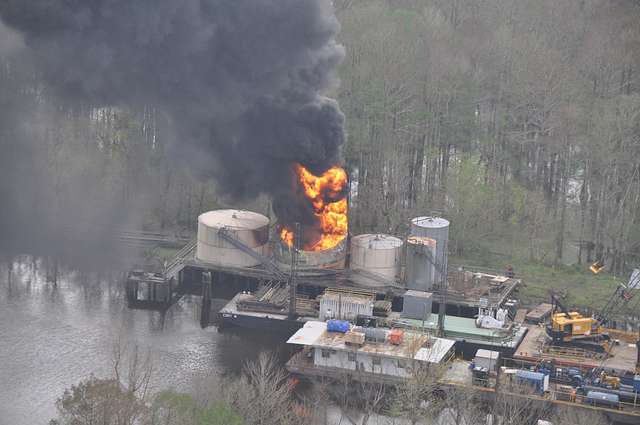 |
| The Trump administration is proposing to change rules requiring facilities to report hazmat risks. Above, an oil production platform fire in Bayou Sorrel, Louisiana, in 2016. Photo: U.S. Coast Guard/Marine Safety Unit Baton Rouge (Public domain). |
Reporter’s Toolbox: Risk Data Is There Despite Efforts To Hide It
By Joseph A. Davis
 |
The U.S. Environmental Protection Agency is trying to hide from the public key data about how hazardous chemical facilities can sicken, maim or kill the people who live around them. It’s the latest repeat of an old cycle. Environmental journalists have a stake.
In February, the Trump EPA proposed changes in the rule requiring thousands of facilities to report hazards they present to neighboring communities. Those risks range from toxic chemicals like chlorine to things that are explosive, flammable or corrosive.
For years, the petrochemical industry and its allies in Congress have pushed for similar blackouts. The reason they give is that “terrorists” would blow the plants up if they knew. It got worse after 9/11.
Two things: First, the terrorists have known all about it for years, or would if they cared. They long ago learned that truck bombs were cheaper, easier and more effective.
No matter what rules Congress or
the EPA make, the data has already
been released and is easily available.
Second, no matter what rules Congress or the EPA make, the data has already been released and is easily available. Toolbox is here to tell you where.
The data in question is from what’s called the Risk Management Program. Congress passed it as part of the Clean Air Act in 1990, but the EPA delayed putting it into effect until 1996. Facilities handling hazardous materials are required to file RMP data with the EPA, saying what impacts a worst-case disaster would have on people near the plant.
The petrochemical industry has been pushing for years to prevent the public from knowing about these hazards. And environmentalists and a few journalists have been trying to inform the public over the many years since the 1984 Bhopal disaster. Meanwhile, as the two political parties alternated in power, the rules for safety and disclosure have seesawed back and forth.
In the latest chapter, the Trump EPA has proposed a rule withholding most key data. SEJournal’s WatchDog Opinion column and other publications have been telling this story (and advocating disclosure) for years.
Where to look for RMP data
There have been several efforts to publish this data over the years. Here are some:
- Data Liberation Project: This volunteer outfit was started by Jeremy Singer-Vine, who is now data editor at The New York Times. It still operates. Find its rendition of the RMP database here. It has data through the end of 2025. We like it because it is up to date and because it cleans the data. (Even better, it includes the uncleaned data so you can check it yourself.)
- Houston Chronicle/Reynolds Journalism Institute: One of the best early RMP data efforts came from the Houston Chronicle and the University of Missouri in 2016. Credit Chronicle reporter Mark Collette and former data editor Matt Dempsey for rescuing what was then the best public version of the RMP database. It is still online (with other chemical risk databases). Sadly, it has not been updated since April 2018. But many of the facilities are the same.
- RTK.net: Although no longer active, RTK.net, the database that the Chronicle preserved, was originally built by volunteers in 1989, virtually as soon as companies were required to submit their data. It was a time when RMP data could not really be had outside of a guarded reading room. It was supported by a nonprofit then called OMB Watch (later renamed the Center for Effective Government, and now defunct). A lot of credit for keeping it alive goes to OMB Watch’s then-director, Gary Bass.
Other databases to scour
There’s something else the government doesn’t want you to know, no matter if you are a terrorist, an activist, a first responder … or a journalist. And that is that you can fairly easily figure out where the biggest hazmat threats to public safety are by using the abundance of other databases that tell you the location and what materials are handled.
That’s why we love the Toxics Release Inventory, the grandmother of them all. The TRI was started back in 1986 — when data still moved via dial-up modems. We’d guess it lists most or all of the RMP sites and what dangerous chemicals they handle. From that — and easily available maps and demographics — you can figure out how bad the worst could be.
Other databases include the EPA’s RCRAInfo Hazardous Waste Information Platform, Facility Registry Service, ChemView and Enforcement and Compliance History Online.
Though we love data journalism, we still believe in using our eyes. Pay attention to that 90-ton chlorine tank car parked at your nearby railroad siding, the food storage warehouse that uses tons of toxic ammonia for refrigeration, the feed store that sells ammonium nitrate fertilizer or the chemical tank at a local plant.
[Editor’s Note: For more on this topic, see a TipSheet on a hazardous risk reporting resource at risk of a Trump blackout, a Feature on chemical plants, terrorism and regulations, WatchDog Opinion columns on risk management plans and on EPA chemical risk info as trade secrets, plus Backgrounders on the workings of the Chemical Safety Board and the need for ongoing coverage of chemical safety. We’ve also got Toolboxes to help you use the CompTox chemicals dashboard, CAMEO software for covering chemical disasters and Toxic Substances Control Act, as well as TipSheets on hazardous site datasets, tracking down chemical facilities and secret rail hazmat routes near you, and on using toxic chemicals data for reporting in your community. Also see our Feature on how journalistic teamwork uncovered years of chemical regulatory failure in Texas and more on our Topic on the Beat: Disasters page. Plus track headlines on chemicals and on disasters with EJToday.]
Joseph A. Davis is a freelance writer/editor in Washington, D.C. who has been writing about the environment since 1976. He writes SEJournal Online's TipSheet, Reporter's Toolbox and Issue Backgrounder, and curates SEJ's weekday news headlines service EJToday and @EJTodayNews. Davis also directs SEJ's Freedom of Information Project and writes the WatchDog opinion column.
* From the weekly news magazine SEJournal Online, Vol. 11, No. 22. Content from each new issue of SEJournal Online is available to the public via the SEJournal Online main page. Subscribe to the e-newsletter here. And see past issues of the SEJournal archived here.
SEJ Publication Types:
Topics on the Beat:
Region:
Visibility: