



SEJournal Online is the digital news magazine of the Society of Environmental Journalists. Learn more about SEJournal Online, including submission, subscription and advertising information.
August 6, 2025
 |
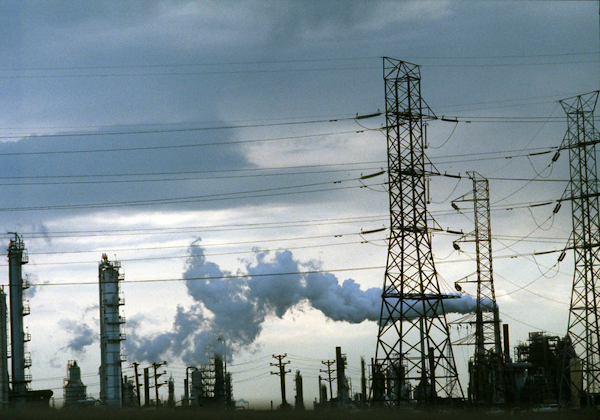 |
| A factory smokestack in New Jersey emits pollutants into the air. According to recent reports, lack of enforcement of federal pollution laws is a growing problem. Photo: UN Photo/John Isaac (CC BY-NC-ND 2.0). |
TipSheet: Lapses in Enforcement by Trump's EPA May Yield Local Environment Stories
By Joseph A. Davis
 |
Several reports bring news that the Trump Environmental Protection Agency, under Administrator Lee Zeldin, is barely enforcing the nation’s environmental laws. It’s an unmined trove of local stories.
We’re not making this up. Let’s start with a May story by Tom Perkins in Grist. He put it this way: “Federal enforcement of major violations of environmental laws appears to have ground to a halt.”
As if that weren’t enough, there was the CNN story by Rene Marsh and Ella Nilsen. The headline: “The Trump EPA is telling some staff to stop policing the oil and gas industry.”
Is it true? We don’t quite know … for sure … yet. But it’s fertile ground for investigation.
Why it matters
Enforcement has usually been serious business at the EPA — which is actually how we know about this.
The EPA’s nifty ECHO database (ECHO stands for Enforcement and Compliance History Online) may help you find clues.
If you live in the United States, there is probably a pollution story near you. If you don’t know where it is, ECHO can help you find it.
All this matters because — despite the progress of the last 50 years — polluters are still emitting toxic chemicals into everybody’s air, water and land. And because the people most harmed by this pollution are still often the most vulnerable: poor, Black, Latino, Native American, workers and others. Their health matters.
It’s a story of see-sawing
struggle between environmentalists
and big industry representatives.
The backstory goes back more than half a century. But it’s a story of see-sawing struggle between environmentalists and big industry representatives. Right now, the petrochemical and utility industries are in the driver’s seat.
Story ideas
What are the big polluters in your audience area? Environmental journalists should already have started answering this question. But it’s never too late. It’s a different story on Louisiana’s Cancer Alley, California’s farm fields or Lake Erie’s algae-tainted waters.
Basically, ECHO lets you quickly find violations (or warnings or resolutions of the same) of a facility’s EPA permits — air, water, landfill, injection well or what have you.
If you drill down, you may discover history and patterns, because ECHO gives you a quite detailed history of regulatory action. If a facility got several notices of violation and still didn’t clean up, you will know about it.
ECHO lets you search geographically — by town, state, ZIP code or even street address. So if you know where the object of your search is, you can get there quickly.
ECHO also lets you search by facility. Say it’s a sewage treatment plant you are interested in. You can find it by name, by facility type or by facility number. That last one, facility number, is important because it helps you make connections.
You can find facility numbers in the EPA’s nifty Facility Registry Service, which works as a master index of regulated facilities. You can search by name, industry type or location.
One cool thing about the Facility Registry Service is that it links you quickly to almost every bit of data in the EPA’s vast range of data systems once you have the facility number. Sure, that sewage plant has a water discharge permit — but is it polluting land or air as well?
The registry service helps you
find other polluting facilities
run by the same company
all over the United States.
Another cool thing about the registry service is that it helps you find other polluting facilities run by the same company all over the United States. That’s a lens on corporate accountability — say if the company is mismanaging facilities in other places far away.
In this age of “no enforcement,” you can use ECHO to find misdeeds by the EPA itself — or by regional offices, state regulators or even the Justice Department’s Environment and Natural Resources Division.
Joseph A. Davis is a freelance writer/editor in Washington, D.C. who has been writing about the environment since 1976. He writes SEJournal Online's TipSheet, Reporter's Toolbox and Issue Backgrounder, and curates SEJ's weekday news headlines service EJToday and @EJTodayNews. Davis also directs SEJ's Freedom of Information Project and writes the WatchDog opinion column.
* From the weekly news magazine SEJournal Online, Vol. 10, No. 28. Content from each new issue of SEJournal Online is available to the public via the SEJournal Online main page. Subscribe to the e-newsletter here. And see past issues of the SEJournal archived here.
SEJ Publication Types:
Topics on the Beat:
Region:
Visibility: