


SEJournal Online is the digital news magazine of the Society of Environmental Journalists. Learn more about SEJournal Online, including submission, subscription and advertising information.
February 4, 2026
 |
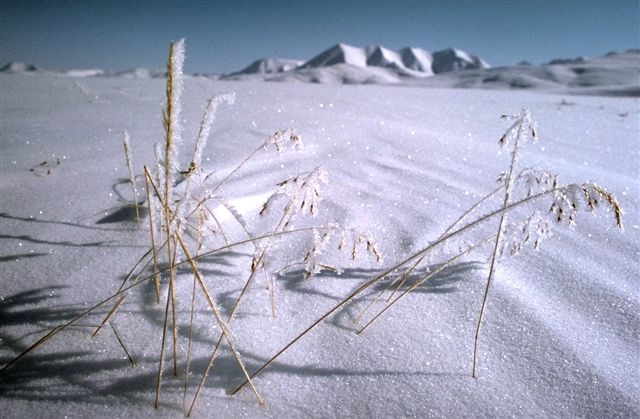 |
| A winter landscape in the Arctic National Wildlife Refuge, where a well drilled four decades ago may hold secrets about the potential for oil in this long-protected ecosystem. Photo: U.S. Fish and Wildlife Service Headquarters/Steve Hillebrand via Flickr Creative Commons (CC BY 2.0). |
WatchDog Opinion: ANWR Well Is Deep and Dark — But Is It Dry?
By Joseph A. Davis
 |
It may be the deepest and darkest of environmental secrets. A secret older than many environmental journalists today. Billions of dollars and an irreplaceable ecosystem are at stake.
The KIC-1 well is the only well ever drilled in the Arctic National Wildlife Refuge’s coastal plain (1002 Area) — the summer refuge and calving ground of the Porcupine caribou herd. It was drilled in 1986 by a consortium including oil companies BP and Chevron. What they found at the bottom of that well has never been officially revealed.
The WatchDog collects secrets like baseball cards.
The conflict over drilling in ANWR is an epic saga too lengthy to tell here. It’s longer than many imagine.
WatchDog traces it back to at least President Eisenhower — who in 1960 actually established the refuge. That was only a year after Congress made Alaska a state — and well before it sorted out the development/conservation status of the huge array of land areas of the state in the Alaska National Interest Lands Conservation Act (ANILCA) of 1980.
ANWR is back in the news
because the Trump administration
restarted the leasing process the
Biden administration had halted.
ANWR is back in the news because, during 2025, the Trump administration and a GOP Congress restarted the ANWR leasing process that the Biden administration had halted. The first sale in January 2025 (amazingly) drew no interest from oil companies. Another one is planned soon, although no date has been set.
The key point here is that ANWR was put off-limits to development from the very start. ANILCA left ANWR in “refuge” status: a conservation status that could only be changed by Congress. Drillers and conservationists, through their allies in Congress and the White House, have been fighting about it ever since.
The secrecy is the story
The land where the KIC-1 test well was drilled was not subject to the protections guarding ANWR because it was in an enclave called Kaktovik, an Iñupiat holding within the refuge.
The biggest reason the well findings are not released is that oil companies are competitive. Drillers like secrecy for many reasons: one being that competitors could buy up rights on adjacent land and cut into potential profits.
The competitive nature of the industry is a complicated story (see Daniel Yergin’s “The Prize”). But secrecy in this one case is easier because the KIC-1 well is not on federal, but Native land.
The secrecy is a lot of what makes the story (kinda like the identity of “Deep Throat”). People guessed for years — partly on the behavior of BP and Chevron.
But WatchDog was titillated in 2019, when New York Times reporters Steve Eder and Henry Fountain tried to unlock (may require subscription) the secret, starting with court documents. Disappointingly, the story did not get past dim memories of secret depositions. Its nondefinitive conclusion was that KIC-1 was a dry hole.
It may not matter:
Everybody knows oil is
abundant under the
North Slope of Alaska.
It may not matter: Everybody knows oil is abundant under the North Slope of Alaska, including offshore formations under the Arctic Ocean and Beaufort Sea. We know because it is being drilled and pumped today — a lot of it from the Naval Petroleum Reserve, known as NPR-A. A single well may not matter.
The federal government generally supports oil industry secretiveness. That can be a problem. At least it was in September 2008 when the Interior Department’s inspector general found corrupt collaboration between drillers and royalty officials. The oil industry was getting royalty breaks — by sharing prostitutes and cocaine with officials. Reform followed scandal.
Unhappy as we are about oil industry secretiveness, we have to admit that Interior agencies publish a lot of information about oil leasing, drilling, production and sales. But it’s just not what WatchDog wants. If you want a spreadsheet of all individual leases or wells, you will be frustrated.
The industry itself feeds on data. What you can get from the government is statistics. The Energy Information Administration is a brilliant example of doing it right (for now). But EIA mostly does statistics. You really have to work to get basic data on individual leases and wells from the Bureau of Ocean Energy Management or the Bureau of Safety and Environmental Enforcement.
Backlog of confidentiality claims protects trade secrets
Keeping well information secret, as with the KIC-1 well, is a special case of a problem that still broadly and profoundly obscures many, many kinds of environmental information: trade secrets.
For example, manufacturers may not want to reveal all the ingredients in their products or processes. When such data is legally required to be disclosed to regulating agencies, companies may claim and get secrecy by calling it “confidential business information.”
But in this age of mass spectrometers, Coke’s secret formula or the Colonel’s secret sauce are easy to discover. Legally, drillers still don’t need to disclose what’s in their fracking fluid.
The beauty of this approach is that confidentiality claims pile up and get backlogged. Whether or not the reasons for a secrecy claim are justified and documented, the data is kept secret until the agency processes the claim. Which may be never.
Bottom line: Environment and energy journalists even today need to stay active and vigilant about information on their beat that is kept secret. Especially today, in the age of Trump, the oil-friendly president.
[Editor’s Note: For more reporting on this topic, check out this TipSheet on drilling in ANWR from the first Trump administration (more here), along with Issue Backgrounders on energy and public lands and on energy and permitting reform, and a Toolbox on the importance of oil market data. Also, visit our Topic on the Beat: Energy page, with more than three dozen reports from SEJournal, plus energy-related headlines from EJToday.]
Joseph A. Davis is a freelance writer/editor in Washington, D.C. who has been writing about the environment since 1976. He writes SEJournal Online's TipSheet, Reporter's Toolbox and Issue Backgrounder, and curates SEJ's weekday news headlines service EJToday and @EJTodayNews. Davis also directs SEJ's Freedom of Information Project and writes the WatchDog opinion column.
* From the weekly news magazine SEJournal Online, Vol. 11, No. 5. Content from each new issue of SEJournal Online is available to the public via the SEJournal Online main page. Subscribe to the e-newsletter here. And see past issues of the SEJournal archived here.
SEJ Publication Types:
Topics on the Beat:
Region:
Visibility: