


SEJournal Online is the digital news magazine of the Society of Environmental Journalists. Learn more about SEJournal Online, including submission, subscription and advertising information.
October 8, 2025
 |
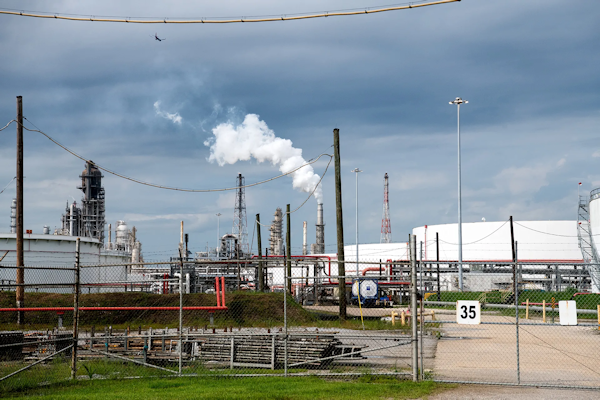 |
| A plume rises from an industrial column in St. Rose, Louisiana, where the author traveled to explore the tension between the community and those planning a multibillion-dollar carbon capture plant. Photo: Akasha Rabut, courtesy Vox. |
FEJ StoryLog: Climate Solutions, for Some, May Not Be
By Yessenia Funes
Hurricane season was just beginning when I flew down to New Orleans for some reporting in 2024. But I wasn’t there to cover the region’s climate-fueled extreme weather. I was visiting to learn how a community was responding to a proposed ammonia production facility.
Despite having reported on the region for most of my career, I had never visited — until that summer. Former President Joe Biden’s landmark climate law, the Inflation Reduction Act, was funneling tons of money toward all types of carbon-reducing initiatives, including controversial carbon capture and storage projects.
The company has been eyeing
the historically Black community,
where residents are already
breathing enough dirty air as it is.
In Louisiana, private company St. Charles Clean Fuels has been eyeing the historically Black community of St. Rose, where residents are already breathing enough dirty air as it is.
Exploring history to make connections
I kept reading about carbon capture and storage, but hadn’t yet had the opportunity to write about the technology with a focus on local health impacts. That’s what environmental justice reporting is all about.
After talking to leading activists, I landed on this community. St. Rose has a rich history. My favorite types of stories explore a place’s history to make connections. I decided to go in person to understand how and why one group of local opponents is doing all it can to stop the ammonia facility’s development.
A grant from the Society of Environmental Journalists’ Fund for Environmental Journalism gave me the travel funds I needed. I could’ve reported the story remotely, but there’s something special about meeting a place firsthand. Sources remember you much better when they get to spend time with you in their home. The grant allowed me to build long-lasting relationships with sources I may have gone years without ever meeting.
The characters, the science
The story had several parts. There were the characters, which required long interviews ahead of my trip and dayslong meetings during the visit.
There was also the science. I did lots of research before heading to Louisiana. While there, I also met with a few scientists who were able to give me reports and break down specific regulatory documents I otherwise wouldn’t have understood. The technical stuff is always the trickiest, but it’s usually some of the most important.
During my trip, I got to meet with company executives and secure their contact information, too. I always aim to be fair and accurate in my work. That means asking the company for comment. I’m not sure how easy that would have been if they had never met me.
One of the highlights of my trip was getting to work alongside photographer Akasha Rabut. Through the FEJ grant, I paid a portion of her fee with Vox. Having her with me was such a thrill. She was a local and understood how to handle folks in the area.
As a woman, I prefer to work as a group, so it was great to have her with me when conducting my interviews. Sometimes, she’d ask questions I wouldn’t consider. I know I’ll be working with her again someday.
I always find on-the-ground
reporting trips challenging.
This trip, however, flew by.
I always find on-the-ground reporting trips challenging. I get homesick quite easily. This trip, however, flew by. I was learning so much and so busy running from one interview to the next, that I didn’t have much time to miss my partner and our cat.
Those are the best kinds of reporting trips: the ones when the scenes and characters write themselves.
I know I’ll keep covering this urgent topic. Carbon capture and storage isn’t going anywhere. As this story highlighted, however, some so-called climate solutions may not be solutions at all depending on whom you ask.
[Editor’s Note: For more on carbon capture, check out our Inside Story Q&A about a journalist’s award-winning project to determine whether carbon capture is a viable climate solution, plus this carbon capture Issue Backgrounder.]
Yessenia Funes, whose story, “What Happens When a So-Called Climate Solution Risks Your Community’s Safety?” was published by Vox in 2024, is an environmental journalist who has covered the justice beat for a decade. She is editor of the SEJournal’s Voices of Environmental Justice column and publishes a creative climate newsletter called Possibilities. Funes has written for publications like Atmos, Vogue, Vox, New York magazine, The Guardian and more. Her approach to storytelling amplifies the voices of those on the front line of our present-day ecological crises. Her reporting has taken her to the West Bank, remote Indigenous communities in Nicaragua, the hostile desert of the American Southwest and post-Hurricane Maria Puerto Rico.
* From the weekly news magazine SEJournal Online, Vol. 10, No. 35. Content from each new issue of SEJournal Online is available to the public via the SEJournal Online main page. Subscribe to the e-newsletter here. And see past issues of the SEJournal archived here.
SEJ Publication Types:
Topics on the Beat:
Visibility: