






SEJournal Online is the digital news magazine of the Society of Environmental Journalists. Learn more about SEJournal Online, including submission, subscription and advertising information.
November 11, 2026
 |
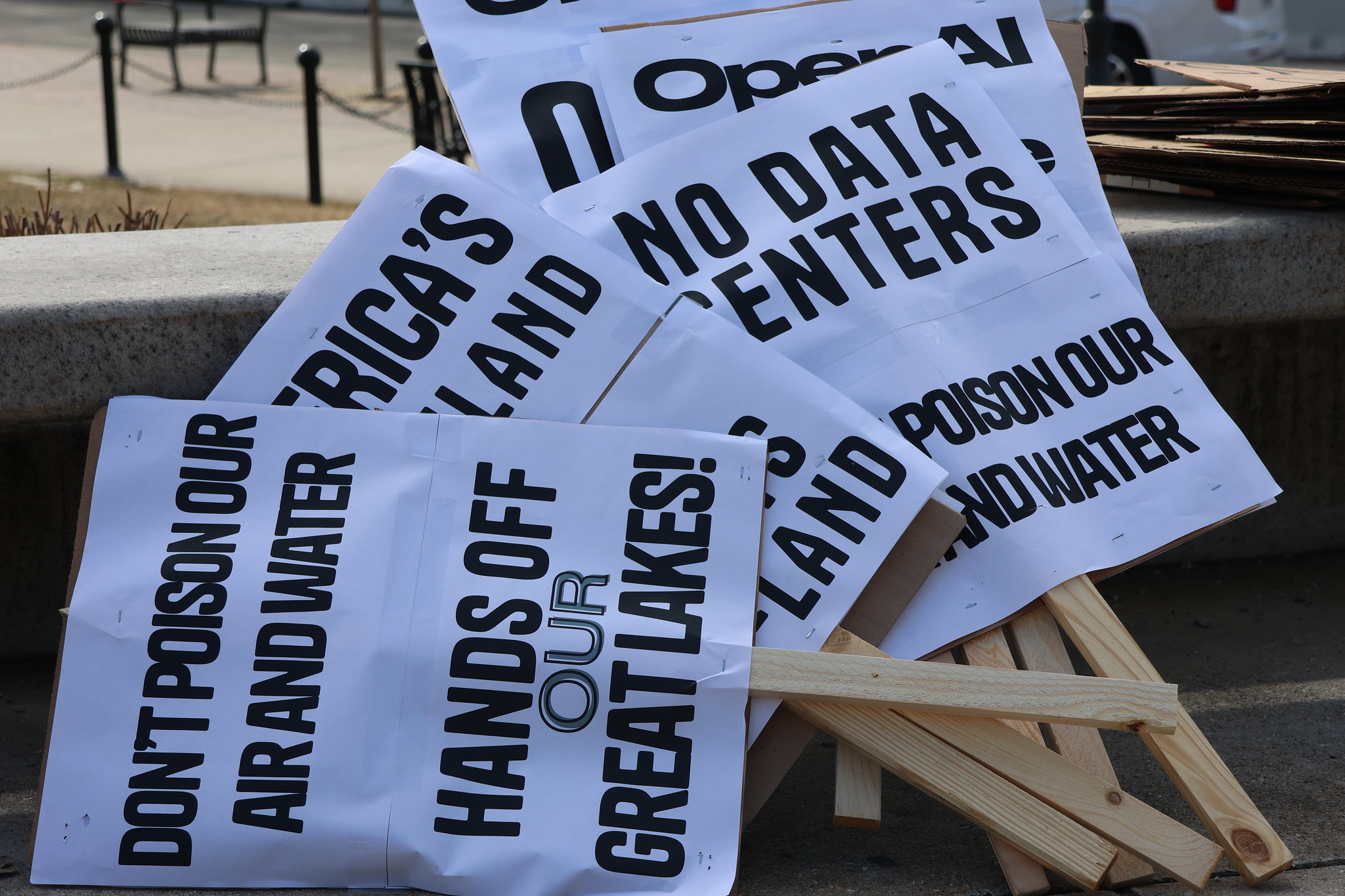 |
| In nearly every community where data centers were on the ballot this Election Day, restrictions were passed. Above, signs from an anti-data center protest at the Wisconsin State Capitol in Madison in February 2026. Photo: Chali Pittman via Flickr Creative Commons (CC BY-NC-SA 4.0). |
TipSheet: Another Big Loser in the 2026 Midterms? Data Centers
By Joseph A. Davis
 |
The GOP may have lost in a landslide in the midterm elections. But as it turns out, so did data centers.
They’re getting a lot of people upset, so were rejected almost everywhere they appeared on the ballot. And data centers are likely to lose on any local ballot during the next two years.
Artificial intelligence may or may not be the greatest thing since sliced bread. There may or may not be limits to how much massive computer power will improve our lives. TipSheet doesn’t judge.
AI also may or may not be the best thing to invest trillions of dollars in. The AI gold rush may or may not be a stock market bubble. Again, TipSheet doesn’t judge. But it also does not plan to invest.
Artificial intelligence may be a great thing, but we are still waiting for human intelligence to kick in.
Local opposition to impacts
One thing is clear. Data centers do have harmful environmental impacts.
They hog scarce local power, raise electric bills, deplete water needed for drinking, make noise, cause air pollution, and crowd local housing and real estate. Some people think they are ugly.
Local governments don’t always put
data centers on the ballot. But they
do usually have to take some action
before a data center can be built.
Local governments don’t always put data centers on the ballot. But they do usually have to take some action (like a zoning change or building permit) before a data center can be built.
This is where local opposition shows up. If you go to a public meeting on the subject, you will find it.
So best to pay attention, if you’re not already — there’s probably at least one near you.
Story ideas
- Use a specialized map to explore and discover what (if any) data centers are in your coverage area. One decent map is by the FracTracker Alliance. There are others, some of which cost.
- What new or enlarged data centers are being planned near you? How will they be powered? Who is financing them? What special exemptions to local rules are they seeking?
- Can you get an estimate of what increased electric power demand will be created by data centers in your area? Talk to local utilities about how they will be paid for and how they will affect rates.
- Is water plentiful or expensive in your area? Will new data centers impact water availability or the health of aquatic species?
- Ask the companies wanting to build data centers how they will address the climate impacts of their projects.
- What local, county and state approvals will be needed for new data centers in your area? Will there be public meetings? Go. Listen. Talk to people. Will there be votes?
Reporting resources
- Data Center Coalition: A major lobbying group for the data center industry. Data firms are members.
- Data Center Watch: A nonprofit that says it tracks grassroots opposition to data center development across the United States.
- AFCOM: Formerly the Association for Computer Operations Management, this professional group has local chapters and advocates for data centers.
- Telecommunications Industry Association: A broad-based industry association that advocates for data centers.
- Food & Water Watch: A multi-issue, membership-based environmental group that is focused on opposing data centers.
- MediaJustice: A grassroots nonprofit focused on organizing communities to oppose data centers.
[Editor’s Note: For more coverage, see the latest data center headlines from EJToday, along with an earlier TipSheet on data centers’ environmental impacts, with more story ideas and reporting resources, plus a Reporter’s Toolbox with databases on data centers. And to better understand AI’s impact, check out a two-parter from EJ Academy on assessing its importance in journalism and teaching, along with a WatchDog Opinion column on whether AI will make it easier to limit press freedom and a look at how wildfire disinformation, aided by AI, became a state weapon.]
Joseph A. Davis is a freelance writer/editor in Washington, D.C. who has been writing about the environment since 1976. He writes SEJournal Online's TipSheet, Reporter's Toolbox and Issue Backgrounder, and curates SEJ's weekday news headlines service EJToday and @EJTodayNews. Davis also directs SEJ's Freedom of Information Project and writes the WatchDog opinion column.
* From the weekly news magazine SEJournal Online, Vol. 11, No. 40. Content from each new issue of SEJournal Online is available to the public via the SEJournal Online main page. Subscribe to the e-newsletter here. And see past issues of the SEJournal archived here.
SEJ Publication Types:
Topics on the Beat:
Region:
Visibility: